The Champagne Cork Palm (Hyophorbe Vershaffeltii)
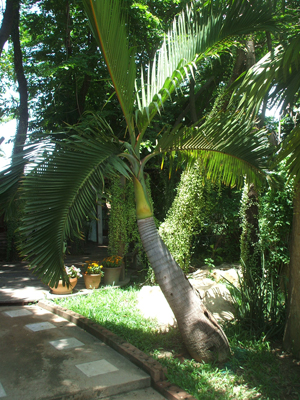 Also known as the 'Spindle Palm,' this great looking specimen is a medium sized palm tree which makes an excellent accent tree on any home or commercial garden landscape.
Over time the palm forms a thick grey trunk which swells in the middle, forming it's interesting profile, and one that gives it's memorable nickname.
The leaves are 9 to 10ft long and […]
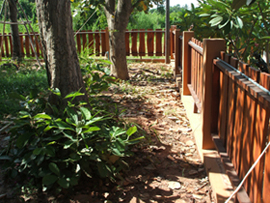 It is important to have clear borders and fencing in gardens in Thailand, not just to delineate property, but also to keep wildlife from strolling / slithering into your yard.
 Pornchai Garden are the Thai specialists at planning and constructing new businesses from the ground up. One of our main specialist areas is coffee shops.
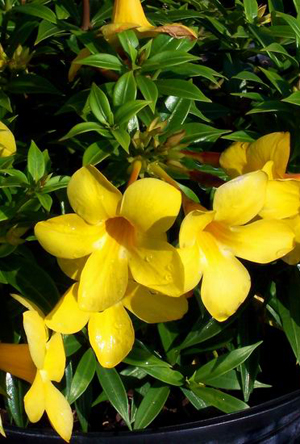 The year round presence of its bright yellow flowers make the Allamanda one of the gardener’s favourite tropical ornamentals.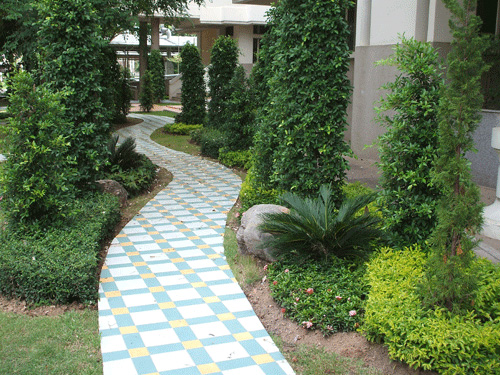
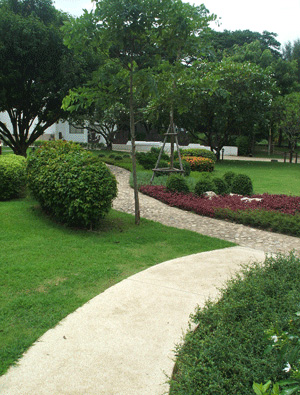
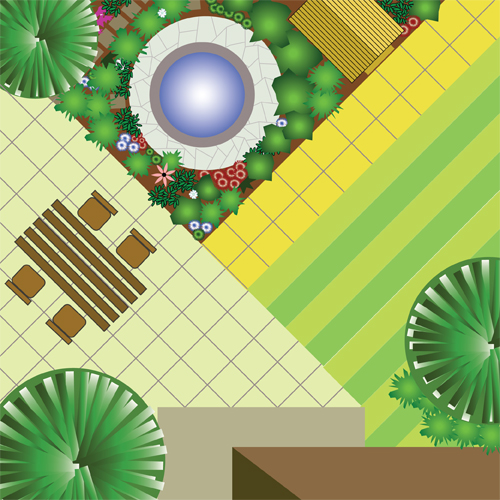 If you have bought or are building a new house in Thailand, and you are at the stage where you want to design and improve your new garden, an interesting and easy way to begin designing how your garden will 'shape up' is to use one of the three popular basic patterns used by garden designers: […]
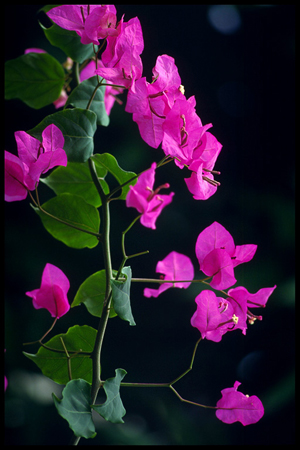 Sometimes known as the paper flower, due to their thin and paper like bracts, Bougainivillea are originally native to South America, but now thrive in South East Asia and are a popular ornamental plant throughout homes and gardens in Thailand.
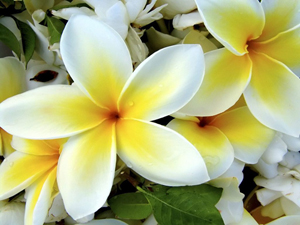 Plumeria (or commonly known as the frangipani) is a genus native to the tropical and sub tropical Americas. They have successfully spread to all tropical locations of the world, including Thailand, where they are often considered as a native species.
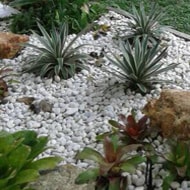
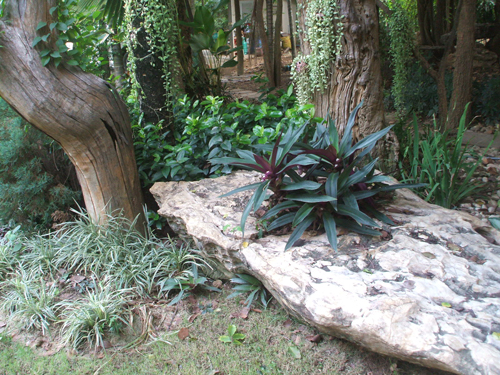 Just as using a good selection of plants, shrubs, trees and flowers can make your garden landscape look beautiful, adding natural rock and landscaping stone is always an excellent complement to a Thai garden landscape, really helping increase that natural feel and ambience to your Thai garden.
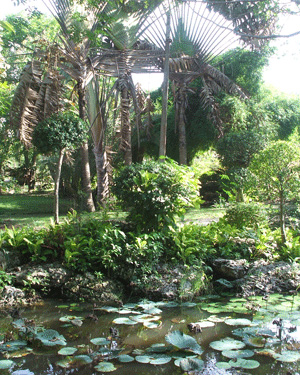 Wardian cases not only allowed the transportation of tropical plants to Europe, but also to other hot-weather colonial centres. The dispersal of exotic species from Central and South America to Asia to the Caribbean became so widespread and so successful that within 2 to 3 generations many species became regarded as native in their new homes.